
Choosing office furniture for a commercial project is very different from selecting a single desk for a private office.
A project may include executive offices, conference rooms, training areas, team workstations and shared meeting spaces at the same time. The furniture needs to work together visually, but it also has to fit approved layouts, support the required configurations, arrive in the right quantities and remain consistent across different batches.
For projects that call for a cleaner architectural appearance and durable metal structures, stainless steel office furniture can be a practical direction.
But the material alone does not make a product suitable for a commercial project.
For distributors, contractors, designers and procurement teams, a more useful question is:
Can this furniture be specified, manufactured and delivered consistently for the project we are planning?
That changes how the furniture should be evaluated.
Start With the Space, Not the Product Photo
One of the easiest mistakes in project purchasing is choosing products first and trying to make them fit the floor plan later.
A better process starts with the workplace itself.
Before comparing individual desks and tables, define the areas that need to be furnished:
- executive offices
- conference rooms
- training rooms
- negotiation and meeting spaces
- open workstations
- height-adjustable work areas
- informal collaboration zones
Each area creates different requirements.
A large executive desk may work well in a generous private office but become inefficient in a compact management room.
A conference table may look straightforward in a catalogue, but the final specification depends on room size, seating capacity, circulation space, cable access and desktop power requirements.
For larger projects, even relatively small dimensional changes can affect chair clearance, walkways and how many workstations fit into the available floor area.
That is why floor plans, target dimensions or at least basic room information are valuable before the final furniture configuration is approved.
Recommended image here: a real NORDA conference room or executive office application image.
Clarify What “Stainless Steel” Actually Refers To
“Stainless steel office furniture” can describe very different constructions.
In some products, stainless steel forms the main leg or frame structure. In others, it is combined with wood-based worktops, cabinets, storage units, modesty panels, glass or additional metal components.
That distinction matters.
Instead of relying on a general material label, buyers should understand which parts of the product use stainless steel and how the overall structure is built.
Useful points to confirm include:
- which components are stainless steel
- frame and leg construction
- tabletop material
- cabinet or storage construction
- visible and concealed connection points
- welding and assembly methods
- surface treatment
- finish direction
The objective is not simply to specify the most expensive material.
It is to establish a clear, repeatable specification that can remain consistent across the project.
Treat Finish Selection as a Project Decision
Stainless steel is often selected partly because of its visual character.
Brushed, polished and other metal finishes can create noticeably different effects under office lighting, particularly when combined with wood grains, neutral surfaces, glass and darker architectural materials.
Finish selection should therefore happen as part of the overall project specification rather than as a small decorative decision at the end.
For projects containing several furniture types, buyers should consider whether the same visual direction can be maintained across:
- executive desks
- conference tables
- training tables
- negotiation tables
- workstation structures
- height-adjustable desks
- storage components
A finish that looks attractive on one isolated sample can feel inconsistent when several product families are installed in the same workplace.
Where appearance is important, confirmed finish references or physical samples can help reduce misunderstandings before mass production begins.
Look at the Structure, Not Just the Appearance
Two office desks can look similar in photographs and still use very different structural systems.
For commercial use, buyers should look beyond the visible finish and understand how the furniture is actually assembled and supported.
Questions worth asking include:
- How is the frame connected?
- Which parts are welded and which are assembled?
- How is the tabletop supported?
- How are longer table spans reinforced?
- How are cabinets or side returns connected?
- Can components be replaced independently?
- Is the structure suitable for export packing and site assembly?
These details are particularly important when furniture is manufactured in one country and installed in another.
A visually minimal table can still require careful engineering underneath the surface.
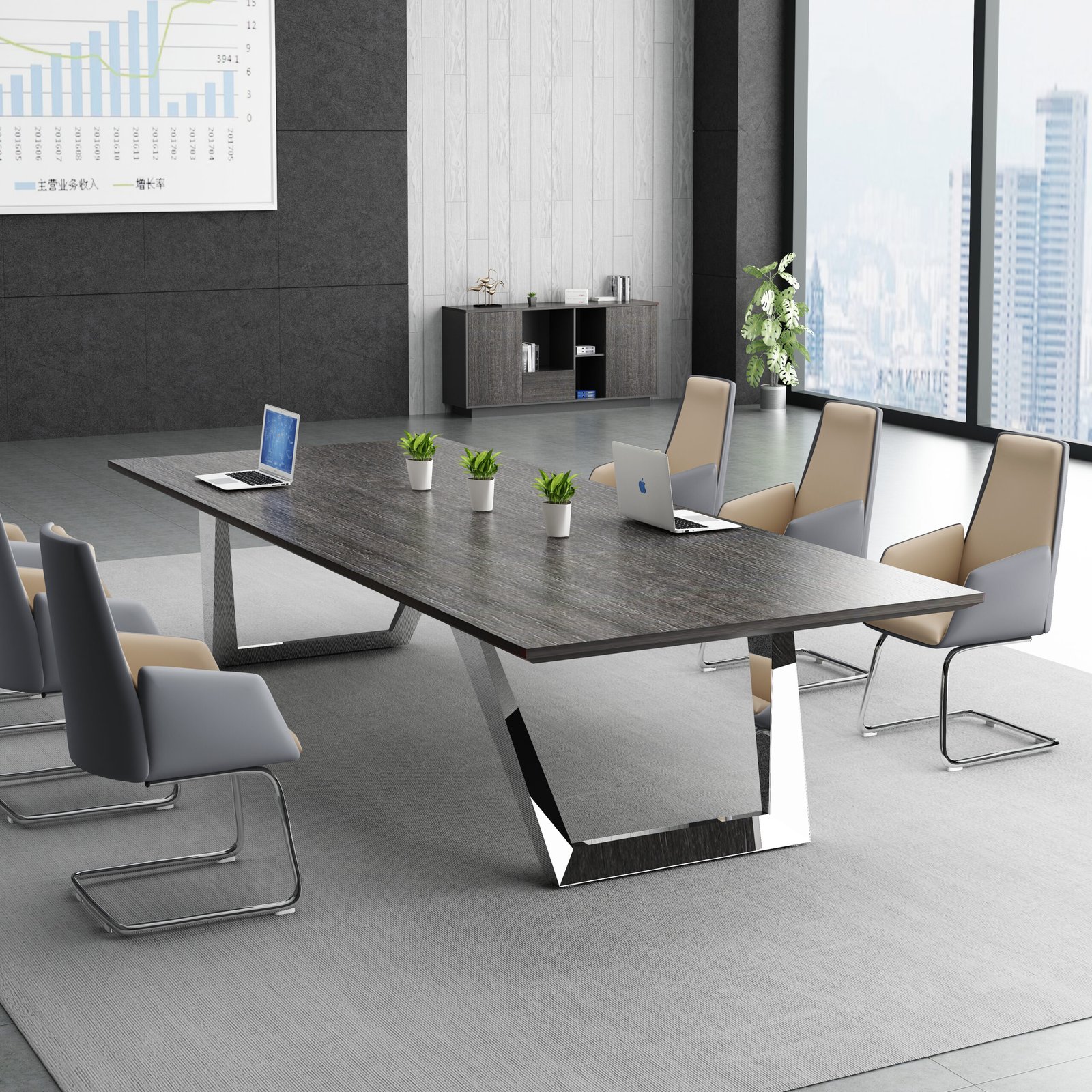
NORDA’s current stainless steel office furniture range includes different structures for executive offices, meetings, training spaces, workstations and adjustable applications, so the structural solution should be considered together with the intended use.
Separate Product Families From Individual Configurations
Commercial buyers rarely need every product in exactly the same configuration.
One design direction may need to support different:
- dimensions
- desk orientations
- cabinet positions
- storage combinations
- tabletop finishes
- seating capacities
- cable-management requirements
- desktop power options
This is why it is useful to distinguish between a product family and an individual configuration.
An executive desk family may follow the same design language while adapting to different office sizes.
A conference table may use the same structural idea at several lengths or seating capacities.
For buyers managing several rooms or floors, this can be more useful than selecting many unrelated products simply because each one looks good individually.
Before an order is confirmed, create a configuration list showing which product variation belongs to each room or project zone.
Plan Power and Cable Access Before Production
Power integration is easy to underestimate when furniture is selected mainly from photographs.
Conference rooms, workstations and executive offices may require:
- AC power
- USB charging
- data connectivity
- cable routing
- cable trays
- desktop power modules
- AV equipment access
These requirements should ideally be identified before the furniture enters production.
Retrofitting power access after a tabletop has already been manufactured can lead to unnecessary cutting, exposed cables or inconsistent installation.
For projects that need integrated connectivity, NORDA also develops desktop power socket solutions for meeting tables, workstations and other office furniture applications.
The electrical specification still needs to match the destination market and project requirements, but the furniture and power solution should be planned together.
Consider Height-Adjustable Furniture as a Separate Technical Requirement
Height-adjustable furniture deserves additional attention because the final product depends on more than the appearance of the desktop.
Buyers may also need to consider:
- frame configuration
- lifting system
- adjustment range
- control method
- cable movement
- storage position
- tabletop dimensions
- integration with cabinets or returns
If adjustable desks are part of the project, it is better to review them as a technical furniture category rather than treating them as a standard desk with moving legs.
You can review NORDA’s current height-adjustable desk range to compare the different office applications being developed around this structure.
Recommended image here: a real NORDA height-adjustable desk or metal structure detail already used on the website.
Evaluate the Manufacturer as Part of the Product
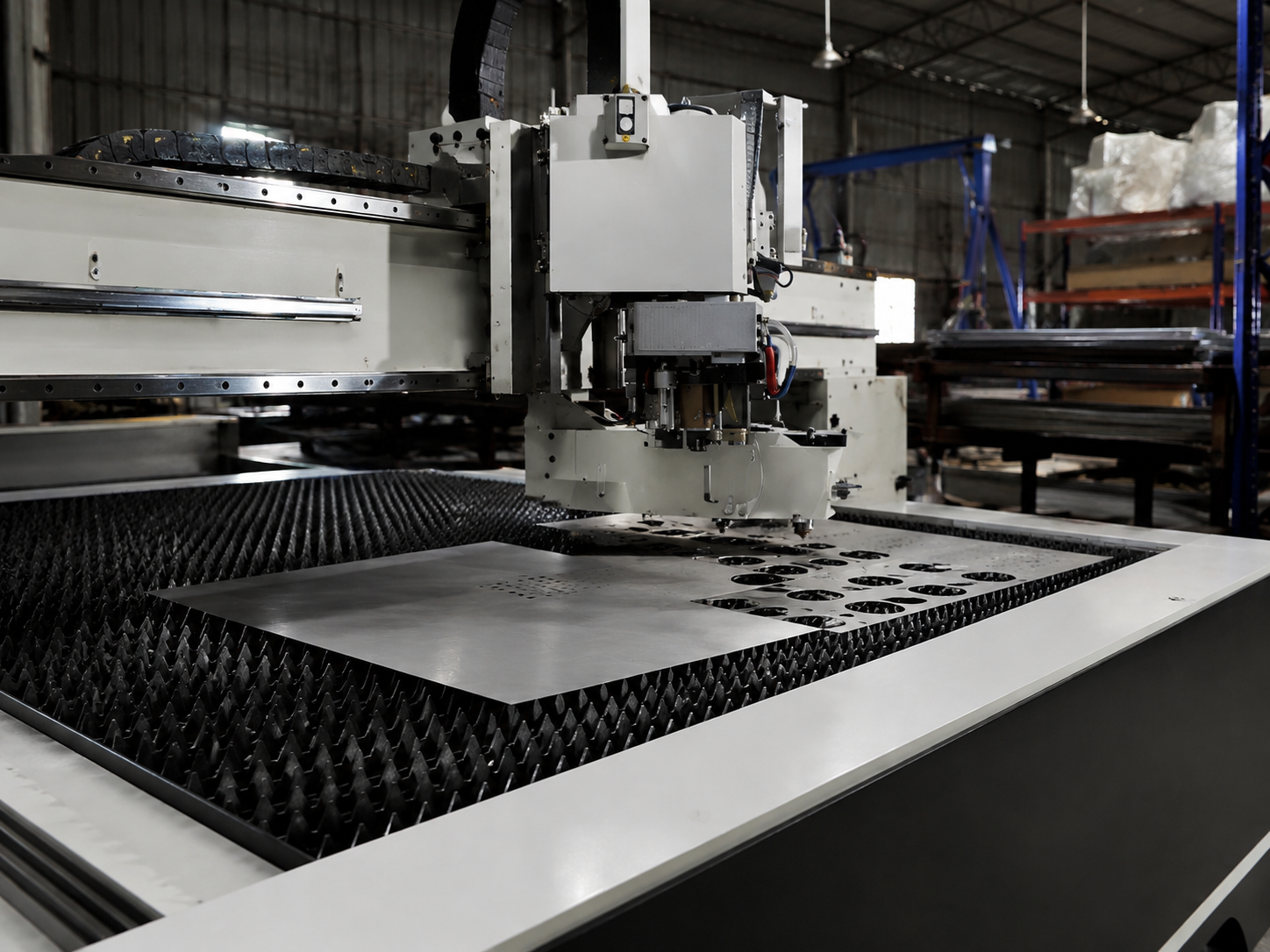
For commercial procurement, product quality is only one part of the purchasing decision.
The supplier’s ability to manage project requirements can have just as much impact on the final result.
Buyers should understand whether the manufacturer can support several areas.
Product Development and Configuration
Can dimensions, finishes or configurations be adjusted where the project requires it?
Drawing and Specification Confirmation
Can the supplier provide enough information for the procurement team, contractor or designer to understand what will actually be produced?
Sample or Pre-Production Review
For custom or higher-volume projects, is there a process for checking important details before full production?
Production Consistency
Can finishes, dimensions and construction details remain consistent across several product types or production batches?
Packing and Export Preparation
Is the furniture packed according to the way it will actually be transported, handled and installed?
Project Coordination
Can revisions, quantities and different room configurations be managed without losing control of the specification?
These questions become increasingly important as the project becomes larger or more customized.
Recommended image here: use the real NORDA laser cutting / manufacturing image already shown on the homepage rather than an AI-generated factory image.
Packing Deserves More Attention Than It Usually Gets
Packing is often discussed only after the furniture specification is complete.
For international B2B projects, it deserves consideration earlier.
Large office furniture may include long frames, tabletops, cabinets, metal components, fittings and hardware that all need to arrive without surface damage or missing parts.
Project buyers should confirm:
- how many packages make up one product
- package dimensions where required
- how exposed surfaces are protected
- how hardware is identified
- whether components are packed with the correct unit
- whether package labels support project sorting
- container loading information when required
Good packing is not only about preventing damage.
It can make warehouse handling and site installation easier, especially when one shipment contains furniture for several rooms, departments or floors.
Request Enough Information for a Meaningful Quotation
A useful project quotation requires more than a product link and the question, “What is your best price?”
The clearer the project information, the more meaningful the quotation can become.
For an initial discussion, buyers can provide:
- product type or preferred collection
- estimated quantities
- destination market
- target dimensions
- floor plans where available
- preferred finishes
- storage requirements
- power and cable-management requirements
- expected delivery schedule
- custom configuration requirements
Not every detail needs to be finalized before the first conversation.
But enough project context helps the manufacturer identify suitable products and flag configuration questions earlier.
Compare Suppliers on the Same Scope
When comparing quotations, avoid looking only at the final unit price.
First check whether the quotations are actually based on the same scope.
Differences may exist in:
- material specification
- dimensions
- frame construction
- tabletop specification
- cabinet configuration
- finish
- included accessories
- packing
- customization
- documentation
- delivery terms
If these details are different, two prices may represent two very different products.
A more useful comparison asks:
Are we comparing the same product specification, project support and delivery scope?
Only then does the price comparison become meaningful.
Final Thoughts
Stainless steel office furniture can support many commercial workplace applications, from executive offices and conference rooms to workstations, training spaces and height-adjustable desk configurations.
Successful project sourcing, however, depends on much more than choosing an attractive design.
The strongest projects usually begin with clear requirements:
where the furniture will be used, how it needs to be configured, what finishes are required, how power will be integrated, and how the final products will be manufactured, packed and delivered.
When those decisions are made early, the furniture becomes easier to specify and the project becomes easier to manage.
Explore NORDA’s stainless steel office furniture collection or contact the NORDA team with your product list, quantities, drawings or project requirements to discuss a commercial office furniture project.